





Batja Mesquita
- Media Contact
Batja Mesquita is a social psychologist, an affective scientist, and a pioneer of cultural psychology. She is a Distinguished Professor of Psychology at the University of Leuven, Belgium, where she studies the role of culture in emotions, and of emotions in culture and society. She is director of the Center for Social and Cultural Psychology in Leuven.
Education
Mesquita obtained a Bachelors in Psychology and a Bachelors in Philosophy at the University of Amsterdam. She obtained a Masters (summa cum laude) in experimental psychology from the same university, focusing her master thesis on gender differences in emotions. During her Ph.D. in psychology (summa cum laude) she developed her initial insights in the (indispensable) role of culture for emotions. Mesquita spent her postdoc years at the University of Michigan, where she was part of the ‘Culture and Cognition group’ that played a key role in the start of Cultural Psychology.
Professional development
Intrigued by the contrast between the ethnographic findings of marked cultural differences in emotions and psychological research that yielded universality, Mesquita set out to understand the role of culture in emotions. In an extensive literature review that appeared in Psychological Bulletin, she and Nico H. Frijda arrived at a synthesis of the research findings from different discipline, which challenged the notion of universal basic emotions. They concluded that, while some aspects of emotions may be universal, other aspects are cross-culturally different. In later work, Mesquita showed how cultural differences in emotions are systematic and meaningful, and can be understood from cultural differences in self and relationship models (e.g., Mesquita, 2003Mesquita, B. (2003). Emotions as dynamic cultural phenomena. In R. Davidson, H. Goldsmith, & K. R. Scherer (Eds.), The handbook of the affective sciences (pp. 871-890). New York, NY: Oxford University Press.). The finding of systematic and meaningful cultural differences led Mesquita to formulate a socio-cultural theory of emotions. According to this theory, emotions emerge from interpersonal interactions that are bound and guided by cultural meanings and practices. Her current research focuses on unveiling the interpersonal processes that give rise to cross-culturally different emotions. In another line of research, Mesquita and her colleagues study the consequences of cultural differences in emotions for the multicultural society. They have yielded evidence for emotional acculturation: Emotions change as a result of contact with another culture. The work on acculturation shows the role of culture in producing and reproducing emotions, even beyond their initial socialization. It has also led to a cultural psychological theory of acculturation, in which ‘deep’ psychological processes, such as emotions, change upon contact with another culture. Mesquita’s research interests include the consequences of emotional misfit of immigrant minorities for their belonging to and inclusion in majority culture.
Primary Interests:
- Culture and Ethnicity
- Emotion, Mood, Affect
- Intergroup Relations
- Interpersonal Processes
- Motivation, Goal Setting
- Self and Identity
Research Group or Laboratory:
Note from the Network: The holder of this profile has certified having all necessary rights, licenses, and authorization to post the files listed below. Visitors are welcome to copy or use any files for noncommercial or journalistic purposes provided they credit the profile holder and cite this page as the source.


Video Gallery
The Psychosocial Challenges of Poverty
Books:
-
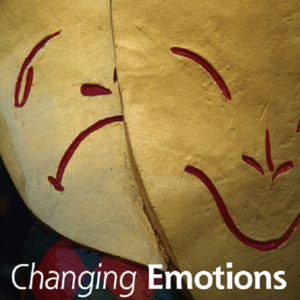
Hermans, D., Rimé, B., & Mesquita, B. (Eds.). (2013). Changing emotions. London: Psychology Press.
- Linked image: Changing Emotions
- Mesquita, B. (2022). Between us: How cultures create emotions. New York: W.W. Norton & Co.
-
Mesquita, B., Barrett, L. F., & Smith, E. (Eds.). (2010). The mind in context. New York: Guilford.
- Linked image: The Mind in Context
Journal Articles:
- Boiger, M., Ceulemans, E., De Leersnyder, J., Uchida, Y., & Mesquita, B. (2018). Beyond essentialism: Cultural differences in emotions revisited. Emotion, 18(8), 1142-1162.
- Boiger, M., Uchida, Y., Norasakkunkit, V., & Mesquita, B. (2016). Protecting autonomy, protecting relatedness: Appraisal patterns of daily anger and shame in the United States and Japan. Japanese Psychological Research, 58(1), 28-41.
- Coskan, C., Phalet, K., Güngör, D., & Mesquita, B. (2016). Relationship context matters: Cultural differences in self-construals revisited. Cross-Cultural Research, 50(1), 63-84.
- De Leersnyder, J., Kim, H., & Mesquita, B. (2015). Feeling right is feeling good: Psychological well-being and emotional fit with culture in autonomy- versus relatedness-promoting situations. Frontiers in Psychology 6(630).
- De Leersnyder, J., Koval, P., Kuppens, P., & Mesquita, B. (2017). Emotions and concerns: Situational evidence for their systematic co-occurrence. Emotion, 17(6), 895-1045.
- De Leersnyder, J., Koval, P., Kuppens, P., & Mesquita, B., (2018). Emotions and concerns: Situational evidence for their systematic co-occurrence. Emotion, 18(4), 597-614.
- Delvaux, E., Meeussen, L., & Mesquita, B. (2015). Feel like you belong: on the bidirectional link between emotional fit and group identification in task groups. Frontiers in Psychology, 6(1106).
- Delvaux, E., Meeussen, L., Mesquita, B. (2016). Emotions are not always contagious: Longitudinal spreading of self-pride and group pride in homogeneous and status-differentiated groups. Cognition and Emotion, 30(1), 101-116.
- Delvaux, E., Vanbeselaere, N., & Mesquita, B. (2015). Dynamic interplay between norms and experiences of anger and gratitude in groups. Small Group Research, 46(3), 300-323.
- Gobel, M. S., Benet-Martinez, V., Mesquita, B., & Uskul, A. (2018). Europe's culture(s): Negotiating cultural meanings, values, and identities in the European context. Journal of Cross-Cultural Psychology, 49(6), 858-867.
- Jasini, A., De Leersnyder, J., Phalet, K., & Mesquita, B. (2019). Tuning in emotionally: Associations of cultural exposure with distal and proximal emotional fit in acculturating youth. European Journal of Social Psychology, 49(2), 352-365.
- Mesquita, B., & Barrett, L. F. (Eds), (2017). Editorial overview: Emotion. Current Opinion in Psychology, 17, iv-vi
- Mesquita, B., & Frijda, N. H. (1992). Cultural variations in emotions: A review. Psychological Bulletin, 112(2), 179-204.
- Mesquita, B., Boiger, M. & De Leersnyder, J. (2017). Doing Emotions: The role of culture in everyday emotions. European Review of Social Psychology, 28(1), 95-133.
- Mesquita, B., Boiger, M., & De Leersnyder, J. (2016). The cultural construction of emotions. Current Opinion in Psychology, 8, 31-36.
- Mesquita, B., Vissers, N., & De Leersnyder, J. (2015). Culture and emotion. In James Wright & John Berry (Eds.), International Encyclopedia of Social and Behavioral Sciences 2nd Edition (pp. 542-549). Elsevier.
- Ozcanli, F., Ceulemans, E., Hermans, D., Claes, L., & Mesquita, B. (2019). Obsessions across two cultures: A comparison of Belgian and Turkish non-clinical samples. Frontiers in Psychology, 10, 657.
Other Publications:
- De Leersnyder, J., Boiger, M., & Mesquita, B., (2015). Cultural differences in emotions. In Robert Scott & Stephen Kosslyn (Eds.), Emerging Trends in the Social and Behavioral Sciences: An Interdisciplinary, Searchable, and Linkable Resource (pp. 1–15). Hoboken, NY: Wiley.
- Mesquita, B., & Albert, D. (2014). The cultural regulation of emotions. In J. J. Gross (Ed.), The handbook of emotion regulation(2nded., pp. 284-301). New York: Guilford Press.
- Mesquita, B., De Leersnyder, J., & Boiger, M. (2016). The cultural psychology of emotion. In Lisa Feldmann Barrett, Michael Lewis, & Jeannette M. Haviland-Jones (Eds.), Handbook of emotions, 4th edition (pp. 393-411). New York, NY: Guilford Press.
- Mesquita, B., De Leersnyder, J., & Jasini, A. (2017). The cultural psychology of acculturation. In S. Kitayama & D. Cohen (Eds.), Handbook of Cultural Psychology. New York, NY: Guilford Press.
- Mesquita, B., Marinetti, C., & Delvaux, E. (2012). The social psychology of emotions. In S. T. Fiske, & C.N. Mc Crae (Eds), The Handbook of Social Cognition (pp. 297-317). New York: Sage.
Courses Taught:
- Cultural Psychology
- Emotion Psychology
- Methods of Qualitative and Mixed-Methods Research
- Psychology, Culture, and Society
- Social and Cultural Psychology
Batja Mesquita
Department of Psychology
KU Leuven
Tiensestraat 102
3000 Leuven
Belgium
- Phone: +32 16 32 58 68
- Fax: +32 16 32 59 23
- Email: mesquita@kuleuven.be
